
Wunder Mobility changelog
Release 47-2025 – Workflow Improvements for Vehicles, Tasks, and Business Accounts
Highlights
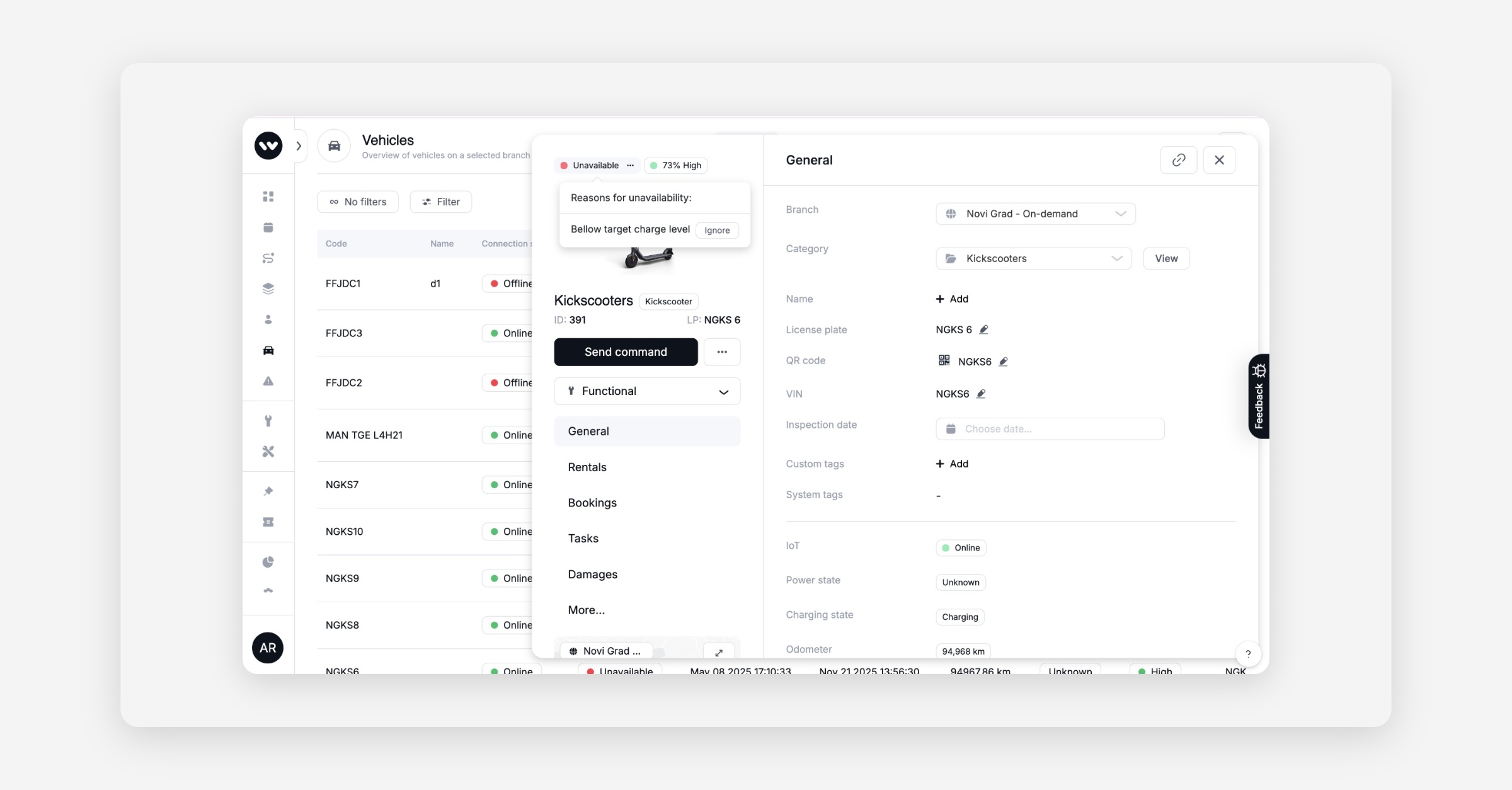
Show why a vehicle is blocked + one‑time charging override. The vehicle panel now lists explicit unavailability reasons and lets authorized operators apply a one‑time Ignore Charging Restriction for the next rental; the setting was renamed from Allow Charging to Charging Restriction for clarity. This removes guesswork and gives operations a controlled escape hatch during relocations or peak demand.
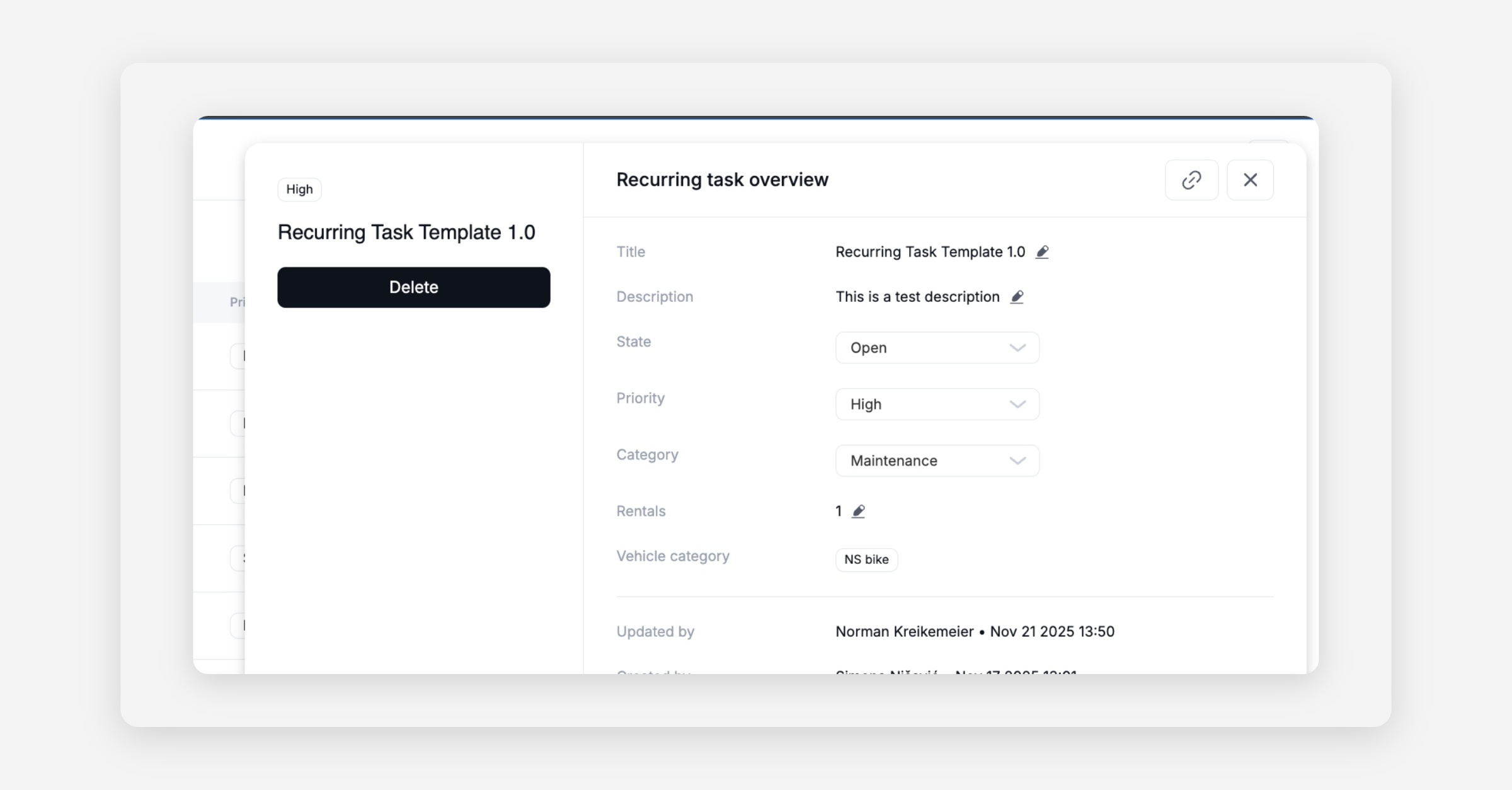
Better task prioritization via Category, Priority, and Severity. The recurring‑task setup supports Category and Priority/Severity and surfaces them across lists and details. This improves routing, SLA focus, and reporting without changing current workflows.
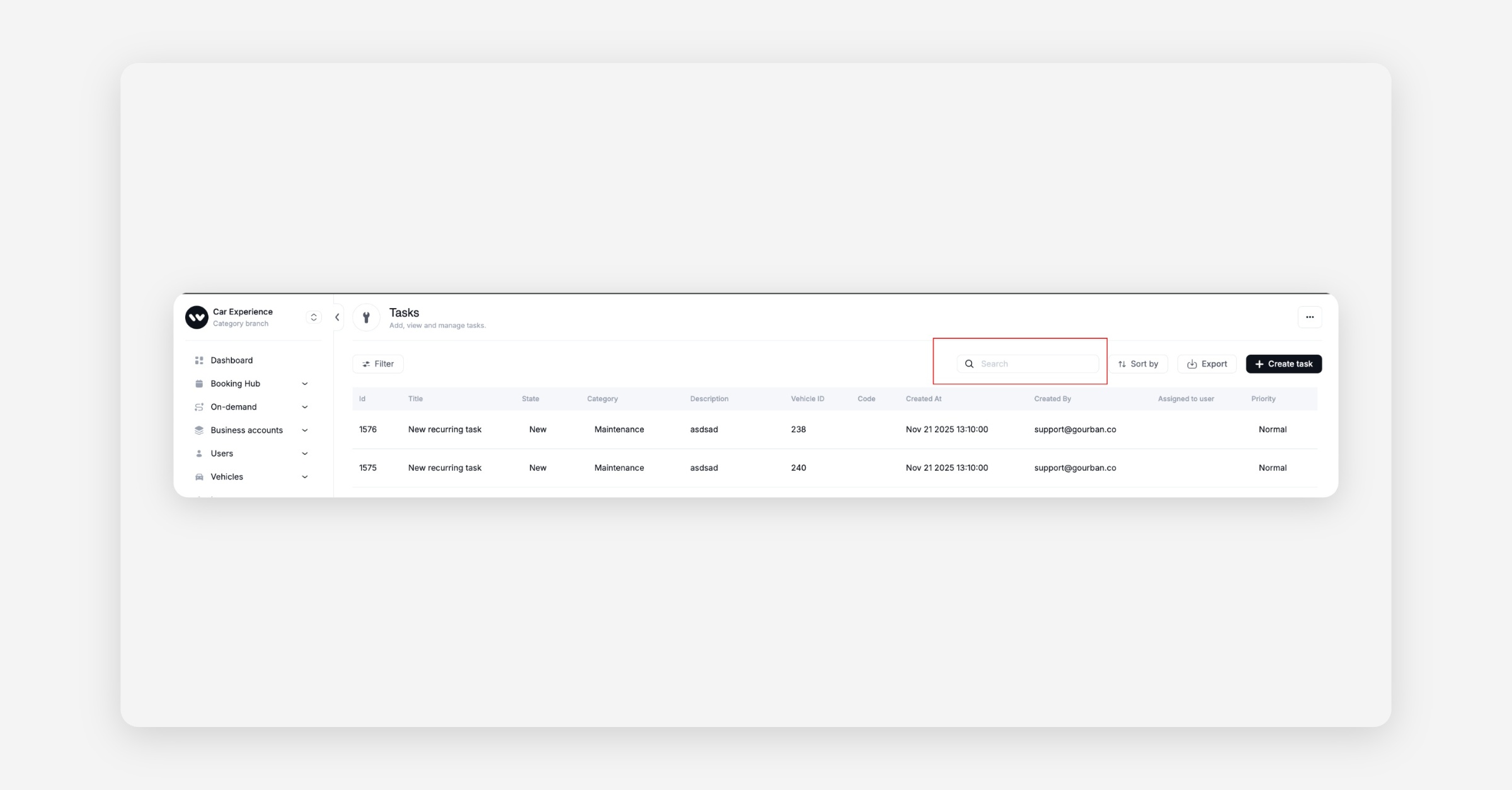
Find records faster in the dashboard — and via API. In the dashboard, Bookings/Rentals search matches first+last name tokens and license plates, and Tasks/Damages lists support free‑text search; for integrations, GET /tasks and GET /damages include a searchText filter. This shortens on‑screen triage and enables precise server‑side filtering in external tools.
Pricing guardrails for consistent quotes. Price estimation now respects the booking’s pricing bundle version and a DB constraint blocks EXPIRED vouchers from having future validity; docs cover bundle‑version quoting. This aligns quotes with actual charges and prevents bad vouchers from polluting pricing data.
New Dashboard B2B
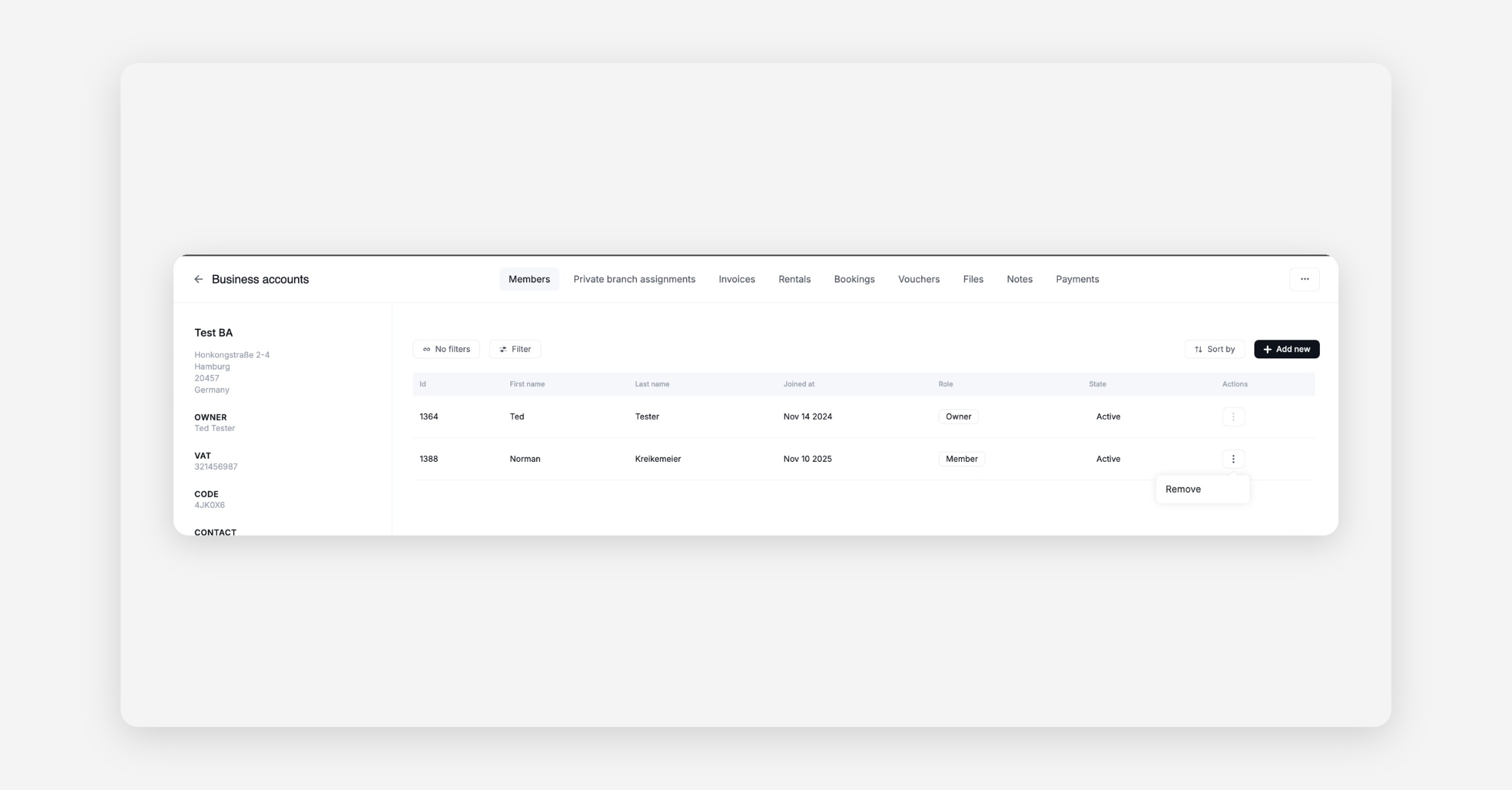
Remove members from Business Accounts. Operators can inactivate members directly in Business Accounts → Members to keep rosters current and control billing/report access. This avoids backend requests and reduces access drift.
Fix — tag assignment with large tag sets. Creating and assigning tags for Business Accounts/Additions now works reliably when there are >50 additions. This prevents missing eligibility rules and rework.
Booking
Improved search for Bookings table. Search now matches combined first + last name tokens and adds license‑plate matching, so support agents can locate a booking in seconds without guessing name order. This shortens customer‑handling time and reduces manual scrolling.
General
Vehicle availability clarity & one‑time charging override. The vehicle panel shows human‑readable unavailability reasons and authorized users can apply a one‑time Ignore Charging Restriction. This reduces back‑and‑forth checks and gives controlled flexibility during peaks.
Recurring Tasks — Category & Priority/Severity. The recurring‑task setup now supports Category and Priority/Severity, and the values flow into generated tasks. This improves routing, filtering and SLA focus without changing existing workflows.
Improved search for Rentals table. Search now matches combined first + last name tokens, enabling faster retrieval of active or historical rentals by customer. This helps operators validate rental details and resolve cases more efficiently.
Platform
Booking
Price estimation respects pricing bundle version. Estimation uses the booking’s assigned bundle version rather than the latest, keeping quotes stable and matching charges. This prevents “calc not found” errors and follow‑up corrections.
API
General
Text search for Tasks & Damages APIs. GET /tasks and GET /damages now support server‑side filtering. This lets client apps and scripts pull precise subsets (e.g., IDs, notes, assignees) without paging entire lists.
Pricing Bundle Version endpoints documented. API reference includes Pricing Bundle Version endpoints so integrators can quote against a specified version. If you can share the exact paths, we’ll list them verbatim in this section.