
Wunder Mobility changelog
Release CW22-2026 – Booking Performance & Service App Productivity
Highlights
Service App productivity push for field teams: A bundled wave of Service App improvements lands this week - task templates can now be selected again, license plates can be long-pressed to copy from the vehicle detail screen, lock/unlock status refreshes immediately after a command is sent, precise SOC filtering is back, and the average energy level reading now matches between Dashboard and Service App. Together they remove friction across the daily field-team workflow.
Operator-configurable subscription switching: Operators can now configure how subscription switching behaves for end users - keeping the default "switch immediately" option or restricting changes to the next renewal date. This addresses customer feedback around the user-experience for discount based subscriptions.
New Dashboard
General
Assignee field no longer clears when a task is completed: Resolved a bug where completing a task in GoDash silently drops the Assignee, leaving no record of who finished the task. The Assignee now stays populated after completion, restoring traceability, accountability, and audit reporting for field operations.
Platform
Booking
Faster booking creation: Bookings created via the app or Dashboard now confirm in well under a second in cases that previously took 10+ seconds, most noticeable during periods of heavy booking activity. The scheduled vehicle-assignment job that runs throughout the day also completes substantially faster, so operators see assigned vehicles appear sooner after a booking is created.
Incoming-vehicle check on empty stations less aggressive: Bookings on currently empty stations are no longer blocked just because a vehicle is scheduled to arrive far in the future. The availability check now only rejects bookings when an incoming vehicle falls inside the configured operational lead-time window, opening up legitimate availability slots that were previously blocked off.
Pricing bundle version correctly resolved on booking update: Booking updates now correctly resolve the pricing bundle version when the Dashboard sends either a pricing bundle ID or a pricing bundle version ID. This corrects a bug where pricing bundles were reset if a booking was edited after a pricing bundle was superseded by a new pricing scheme.
Insurance addition no longer offered to ineligible business accounts: For business accounts without the required annotation, the additions list no longer includes Insurance. Operators now see only the additions actually applicable to the account.
General
Operator-configurable subscription switching behavior: Operators can disable the "switch immediately" option on subscription switching via a new mobile setting, restricting switches to take effect at the next renewal date. Default behavior keeps the existing "switch immediately" capability, so no operator action is needed unless the change is desired.
Veriff
MANUALverifications now returned: ImportedMANUALdriver license verifications are now returned for systems using Veriff, matching the behavior already in place for Onfido. The MANUAL verification state shows correctly in the user side panel during operator review.MaaS webhook pipeline no longer drops refund invoices: MaaS providers with a configured operator-id filter now receive
INVOICE_REFUNDEDand the accompanyingINVOICE_CREATEDevents for refund documents for their own customers, the same way standard invoice creation events are delivered. Resolves a silent webhook drop that broke partner-side refund handling.
API
General
Open tasks and open damages exposed via dedicated overview endpoints: New dedicated endpoints expose open tasks and open damages in their own views, so consumers can pull these high-volume lists without going through vehicle list responses. Complements the deprecation of
openTasksandopenDamageson the vehicle list announced in CW17.MDS endpoints accept static authToken and operator JWT simultaneously: A new opt-in
allowUserAuthFallbackflag on the MDS setting lets the existing external MDS bearer token stay in place while also allowing logged-in operators with theAPI_MDS_READpermission to call the same endpoints. Removes the previous either/or limitation without affecting existing integrations.Bookings expose annotations via API: Bookings now carry annotations (tags) and can be retrieved via API, so partners and integrators can classify bookings - for example by approval type or creation type - alongside the existing annotation surface for vehicles, users, and other entities.
Booking availability check supports excluding an existing booking: The
/back/bookings/available-categoriesendpoint accepts a newexcludeBookingIdparameter. When editing a booking, the vehicle category it's already using will now correctly appear as available for that time slot - instead of being counted against itself and showing a false "unavailable" reading. A category only shows as unavailable if it genuinely conflicts with a different booking, so you can adjust bookings without false roadblocks.Fulltext search on user group members: The
/back/groups/{id}/membersendpoint accepts asearchTextparameter, so consumers can narrow the member list when selecting a new owner instead of pulling the full set.
Data / BI
General
Vehicle and event positions reliably populated in Snowflake: Resolved an issue where vehicle, event, rental, booking, and branch position data could come through as empty in Snowflake after a recent change in the upstream data-ingestion format. Positions now flow correctly across all affected tables in the data warehouse.
VEHICLES.POSITIONpopulated forFUNCTIONALvehicles: Resolved the case where thePOSITIONcolumn was empty in the SnowflakeVEHICLEStable for vehicles in theFUNCTIONALservice state even when live coordinates existed. Positions now reflect current and last-known coordinates per the documented refresh cadence, restoring operational reporting that depends on per-vehicle location.
Service App
General
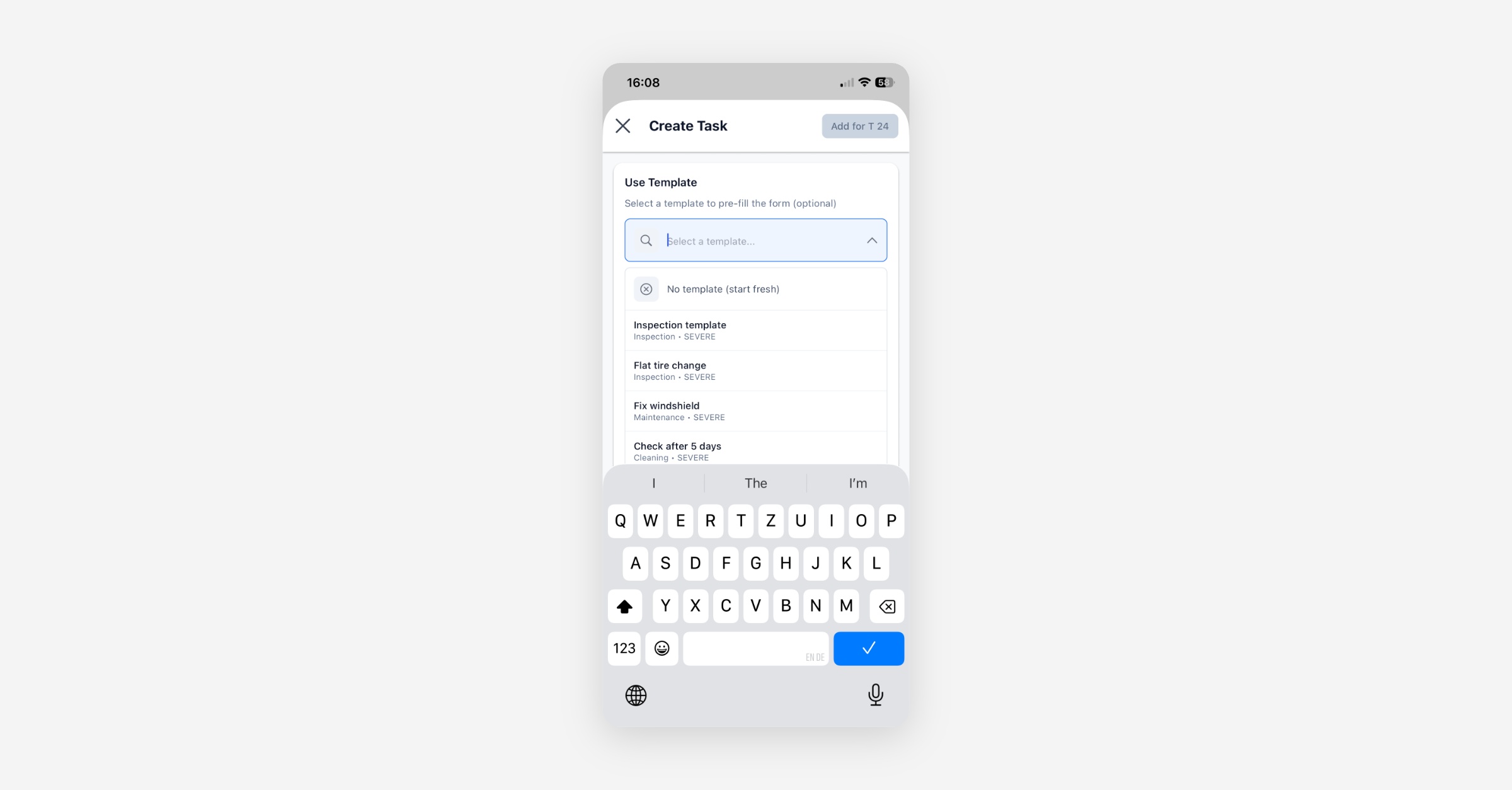
Task templates selectable again: Restored task-template selection in the Service App so operators can create tasks using predefined templates instead of building each one from scratch.
Long-press to copy license plate from the vehicle detail screen: Field service teams can now long-press the license plate or vehicle code on the vehicle detail screen to copy it to the clipboard, with a confirmation toast on iOS and Android. Removes the need to retype plates into chats, tickets, and internal tools.
Lock/unlock status refreshes after the command is sent: The Service App now reflects the current lock/unlock state immediately after a Lock or Unlock command is issued instead of showing the previous state until the screen is manually refreshed. Field vendors no longer have to navigate away and back to see the actual vehicle status.
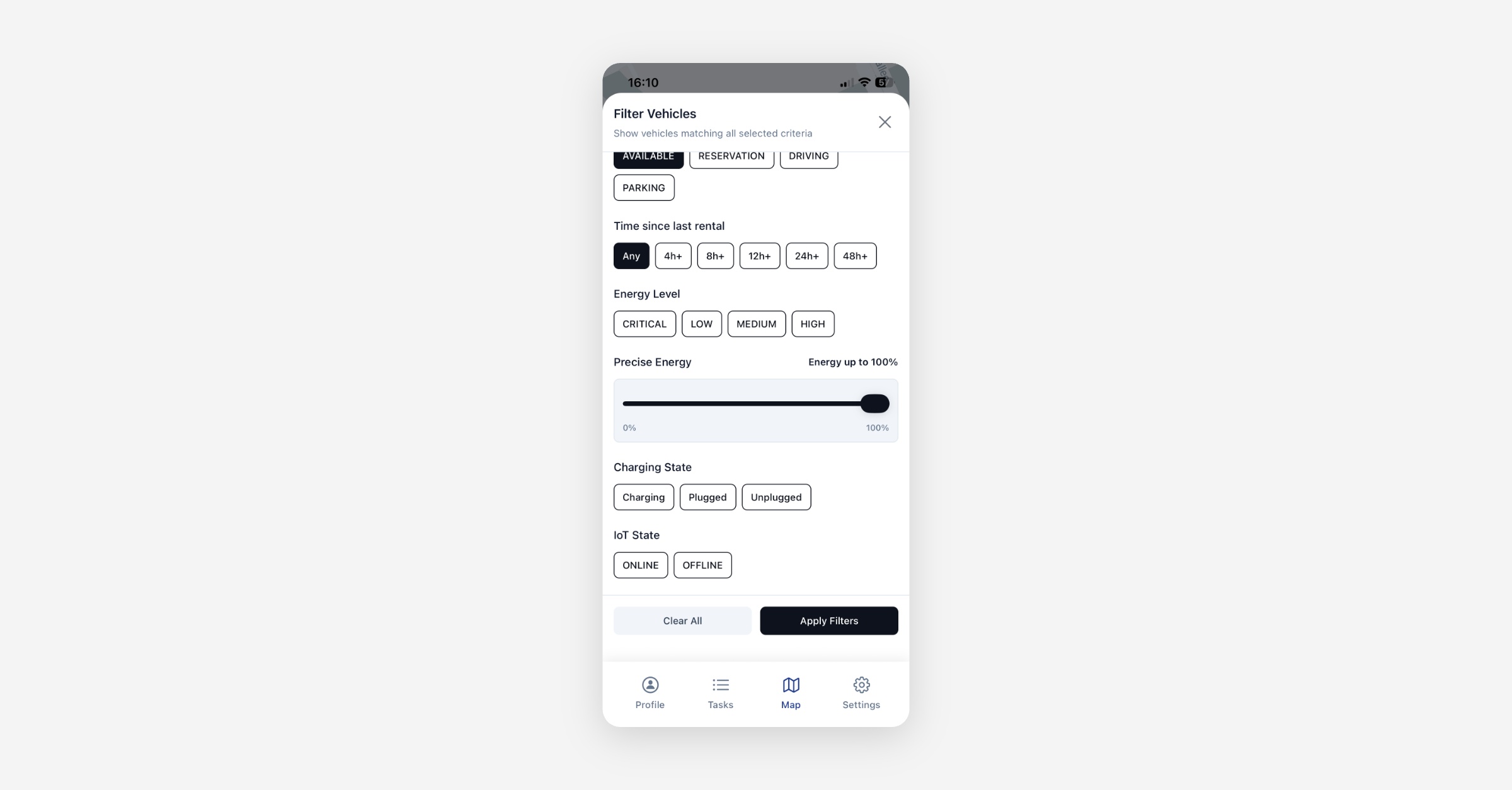
Precise SOC filtering restored in the new Service App: Service teams can again filter by precise State-of-Charge values instead of being limited to predefined ranges, restoring a filtering capability required for daily service operations on the new Service App.
Dashboard and Service App reconciled on average energy level: Resolved the discrepancy where the Dashboard and Service App returned different average energy level figures for the same branch at the same time. Both surfaces now compute the metric from the same underlying logic, so fleet managers see consistent readings regardless of where they check.